
Accreditation shows accountability to the people we serve
As part of a blog series to celebrate CARF International’s 60th anniversary in 2026, the blog editor interviewed CARF’s Managing Director of Employment and Community Services Chasity Chamberlin. The Customer Service Unit Chamberlin manages, along with Medical Rehabilitation, were the first two areas of accreditation CARF International began with in 1966. CARF now provides accreditation in seven health and human services areas.
Employment and Community Services (ECS) represents about one quarter of CARF International’s accreditation business. CARF offers accreditation for 31 ECS programs/services and 5 specific population designations.

Q: Chasity, tell our readers about your background.
A: I started working as the managing director of Employment and Community Services at CARF in 2022. Before that I had been a CARF Surveyor for seven years. I am based in the Dayton, Ohio area and have over 25 years of experience in employment, residential, community integration, and other services for persons with disabilities.
I began working in the Intellectual and Developmental Disabilities (IDD) field with zero experience. I had no prior knowledge, no lived experience. I didn’t even know a single person who received those types of services. I answered an ad in a newspaper for an organization that provided residential supports and instantly fell in love with the population. I just knew this was my spot and where I belonged because of the feeling of being intimately related to the everyday living of the people that I served and the people I worked for. I worked my way up within that organization from middle management to a leadership position and continued my career journey to become the executive director for a day employment program for an organization that provided employment services and community integration.
Q: At what point did you learn about CARF?
A: As the executive director for the Employment and Community Integration Program, I was heavily involved in the process to get everyone ready for a CARF accreditation survey. I was instrumental in the survey process, the interviews, giving the surveyors tours, and answering questions. I really enjoyed being a part of that. It was very cool to me because the peer-review survey model and the CARF standards framework fit well with my approach to service provision and the world that I was working in.
I applied to become a CARF surveyor to benefit my organization. I wanted to be able to see how other organizations were doing things and bring it back to my organization. Becoming a surveyor really opened my eyes to the entire world of service provision, not just in Ohio. I soon realized every county and every state had its own way of doing things. This expanded my knowledge and understanding of the IDD field as a whole.
Being a surveyor was a benefit to my organization, but it also helped me professionally, by growing and expanding my knowledge in the field and through all the networking with other surveyors that have a lot of experience and knowledge. I was not just making an impact in the way services were provided in Ohio or in my organization anymore. It expanded my reach and made me feel more intrinsically motivated.
Q: You have been involved for many years in employment and community services. What are some of the important milestones you have seen?
A: Disability support organizations, particularly ECS programs, tend to operate smoothly as most staff members understand their specific roles and client needs clearly. Yet there have been some pretty pivotal moments. The Employment First initiative was introduced, and in 2012 the Office of Disability Employment Policy launched a major federal initiative—the Employment First State Leadership Mentoring Program (EFSLMP)—to help states establish competitive, integrated employment as the first and preferred option for people with disabilities over segregated alternatives like sheltered workshops. Because of this, I was able to play a role in transforming the way that employment services were being offered.
Employment became a focus for all persons served, just the same as meeting individuals’ residential needs. It was no longer only a few people working in competitive employment. It was a real push for everyone to grow and expand. The aim was not to shut sheltered workshops (because there is always a place for programs that do provide employment services within their own walls), but to expand and increase access to people that wanted to work in the community but needed support services to do so.
There was a transition during this time. Sheltered workshops, which are big warehouse-type buildings where people were doing piece-rate type of work, began to get smaller because people were instead being employed within the community. These programs revamped and restructured their services to provide choice of environment for the individual and the opportunity to gain employment skills beyond counting, packing, and quality assurance. Training programs were created to teach soft skills: how to communicate at work, what is an appropriate relationship, how do you build a resume, and how to interview for a job. This was a pivotal time.
Another great progression to witness was the nationwide shift to downsize numbers of developmental centers and implementation of community-based care. Developmental centers were reduced in number throughout states and the focus shifted from being a long-term solution to a short-term stabilization type of service. The heart of these efforts are to determine what the person needs to be successful in the least restrictive environment, and to provide the tools, training, and supports so that the person is integrated into the community and not living in a state-run developmental center.
The most recent innovation that has had great impact is the use of technology in service provision to increase independence. An example would be a residential home being staffed by direct service professionals at night. For the person served, having someone in their house impacts their privacy and the person may not necessarily need someone physically there, but could benefit by having remote supports available in case of emergency instead.
Adaptive appliances and tools have also helped people to gain independence. An individual with a disability that previously needed someone to assist with prepping and cooking meals can now use tools such as rocker knives or talking scales and timers to aid in cooking their own meals at home.
Another example is the use of video cameras on computers and mobile devices to quickly connect to a live person for questions or guidance. The person has an independent life and access to support when needed.
Q: What do you see coming in the future for ECS?
A: In this business, the only constant is change. Sixty years ago, CARF International started as two organizations that served persons with disabilities and has evolved to include programs across the continuum of care—from children to seniors—and in a variety of settings, environments, and specialty options. Within the Employment and Community Services unit of CARF, the focus is not just on IDD anymore.
We focus on social services in general and how they meet the needs of all persons, regardless of age, diagnosis, or ability. Every person, at some point, receives services from an ECS organization.
ECS differs from CARF’s other customer service units because there is not a qualifier to be eligible to receive services. In Behavioral Health, you need a behavioral health diagnosis. In Aging Services, you need to be beyond a certain age. For Medical Rehabilitation, there is some form of rehabilitation that is clinical in nature. In ECS, we are people who work for people—it encompasses all types of programs that serve all communities. The ECS field is big and diverse.
Services coordination is an example of a service that most people have received in their life, possibly during school-age years and receiving individualized education programs or therapies or when there was discharge planning from a hospital stay. Services coordination is a part of life.
More examples of diverse programs within the ECS field include employment programs for veterans entering or reentering the workforce after either retirement or discharge, programs that serve those who have been incarcerated and are reentering the workforce, and homeless shelters that serve everyone. The programs and services in ECS are available to all and provided by many types of organizations.
As we encounter new barriers and challenges, the ECS field will evolve and CARF will continue to create program standards to help support organizations or enhance the standards we already have to reflect the current needs of the field.
Q: What is a key point you like to make when doing CARF training sessions?
A: The first point I make is that the CARF accreditation process should not be viewed as scary. It is consultative and the process embodies the spirit of continuous improvement. I reinforce that surveyors are their peers in the field, thus they are navigating the same challenges and obstacles that the organizations seeking accreditation are facing. The accreditation process is truly an opportunity to ask questions, receive feedback, and grow.
The second point I make is that CARF surveyors are looking for conformance, they are not searching for mistakes. Surveyors are trained to look for ways you demonstrate conformance to the standards. Every organization is unique. The way one organization does things is going to be different than another, but that does not change the fact that they are both in conformance to the standards.
I have received a lot of feedback from organizations and individuals who went back to their place of work and reiterated these points. They said it made accreditation a bit easier when those concepts were realized.
Q: Why is seeking accreditation important?
A: In my opinion, the most important reason to seek accreditation is that it shows accountability to the people we serve. Implementing CARF standards requires the organization to be committed to asking for, listening to, and incorporating the input from the people they serve.
These insights shape the organization’s strategic planning and every other aspect of their organization. CARF accreditation puts the focus on the person served and how the organization impacts the lives of the people they serve.
Managing Director of Employment and Community Services
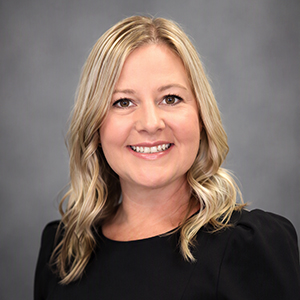
Chasity Chamberlin, MBA, managing director of the Employment and Community Services accreditation area, brings 25 years of experience to her role having worked as a provider, administrator, and executive director for residential, employment, and community integration organizations. She was a CARF surveyor for seven years and holds a master’s of business administration degree and a bachelor’s of science degree, both from Western Governors University.